
If you are an engineering diploma holder or an ITI graduate in Kerala wondering whether a German apprenticeship could beat the usual "study abroad and hope for a job" route, the Mechatroniker path deserves a serious look. It is a paid, structured route into Germany's automotive and engineering workforce: one where you earn a salary from month one, train inside real factories and workshops, and walk out with a nationally recognised qualification that employers across Germany actively compete for.
What does a Mechatroniker actually do?
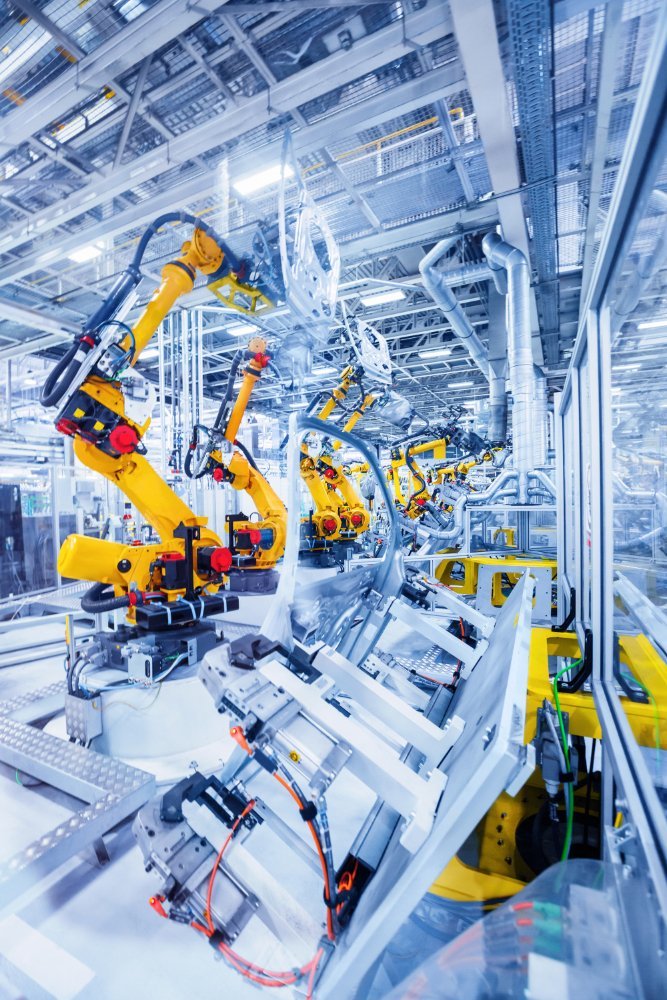
A Mechatroniker (mechatronics technician) works at the intersection of mechanical engineering, electronics, and control systems: exactly the skill combination modern factories and vehicles run on. Day to day, the work includes reading circuit and hydraulic diagrams, installing and calibrating sensors and control units, using diagnostic and measuring equipment to trace faults, and maintaining or repairing mechanical, electrical, hydraulic, and pneumatic systems. Those who specialise in the automotive branch (often trained as Kfz-Mechatroniker) focus on vehicle diagnostics, comfort and safety systems, and manufacturer-specified servicing, while those on the industrial/engineering track work on production machinery, robotics cells, and automated assembly lines.
Program structure and duration
This is a dual (duale) Ausbildung: a German-specific model that blends two learning environments:
- On-the-job training at a company (an automaker, a Tier-1 automotive supplier, a machine-building firm, or an industrial engineering employer), where you work alongside qualified technicians on real production and service tasks.
- Vocational school (Berufsschule) for theory: mathematics, physics, electrical fundamentals, and technical drawing relevant to the trade.
The program is federally regulated and typically runs 3.5 years. In the final year, trainees usually specialise, for example into passenger-vehicle technology, commercial-vehicle technology, or an industrial/automation focus, depending on the employer and region.
Entry requirements
Requirements vary somewhat by employer and Bundesland, but the general expectations are:
- A secondary school qualification with reasonably strong grades, ideally with a good grounding in mathematics and physics
- German language proficiency at least at B1 level, with B2 recommended for technical roles since Berufsschule instruction and workplace communication are entirely in German
- Typical age range in practice tends to fall roughly between 18 and 30, though this is not a rigid legal cutoff
- A genuine aptitude for hands-on, technical work: this is not a desk job
Kerala students coming from a polytechnic diploma or ITI background in mechanical, electrical, or automobile trades usually already have the technical foundation; the main gap to close is German language proficiency, which is exactly why structured preparation before departure matters.
Pay and collective agreements
One of the strongest arguments for this route is that you are paid to train, not paying tuition. Apprentices in Metall- und Elektro-industrie companies bound by IG Metall collective agreements typically start in the range of roughly €1,000–1,100 per month in the first year, with step-ups in subsequent years, plus benefits like vacation and holiday bonuses under many tariff agreements. Pay varies by region and by whether the employer is tarifgebunden (bound by the collective agreement), so exact figures differ across states like Bavaria, Baden-Württemberg, or Hesse. After qualifying, entry-level salaries for trained Mechatroniker in tariff-bound firms commonly fall in a broad €38,000–48,000 gross annual range, rising further with experience, shift allowances, and specialisation.
Career prospects after qualifying
Germany's automotive and broader engineering sector, spanning vehicle manufacturers, component suppliers, and industrial machine builders, has a well-documented shortage of skilled technical workers, and demand for qualified Mechatroniker consistently outpaces supply in many regions. After completing the Ausbildung, typical next steps include:
- Working directly as a qualified Mechatroniker in production, maintenance, or vehicle service roles
- Progressing to Industriemeister (industrial foreman/supervisor) for team-lead and management-track roles
- Pursuing a Staatlich geprüfter Techniker qualification, which under many IG Metall pay scales ranks even above the Meister level
- Continuing into part-time or dual engineering studies for those who want to move further into design and R&D
Why this suits Kerala engineering-diploma and ITI students
Kerala produces a strong pipeline of diploma and ITI-trained mechanical, electrical, and automobile engineering students every year, but domestic placement for hands-on technical roles at German-level pay and precision standards is limited. The Mechatroniker Ausbildung offers a structured, income-generating alternative: you are not gambling on an unpaid internship or an expensive foreign degree, but stepping into an established German system that already knows how to train and absorb technical talent, with a clear qualification and career ladder at the end of it.
Quick FAQ
Do I need to already know German before applying?
You need at least B1-level German for most Ausbildung programs, and B2 is safer for technical roles since Berufsschule lessons and workplace instructions are conducted in German. Very few programs accept candidates with no German at all, so building language proficiency before you apply is usually the first serious step.
Can I choose between automotive and general industrial mechatronics?
Yes. Employers and training centres often distinguish between an automotive-focused track (vehicle diagnostics and servicing) and a broader industrial/engineering track (production machinery, automation). Your specialisation is typically confirmed in the final year of training, and your ITI or diploma background can influence which employers are the best fit.
Is the training allowance enough to live on in Germany?
Trainee pay under collective agreements is modest compared to a qualified professional's salary, but it is designed to be a living stipend, not full independence: many apprentices manage with shared housing and careful budgeting. Pay increases each training year, and it improves substantially once you qualify and move into a full technician role.
Getting the language proficiency, documentation, and employer-matching right is where most applications succeed or stall, and this is exactly where Caspia Overseas Studies, working out of Kochi, supports Kerala students end-to-end: from German language training up to B1/B2 level through to guidance on Ausbildung placement in fields like Mechatronik.